Roasted Pepper and Mozzarella Panini for Two
Dry the fillings before pressing the sandwiches
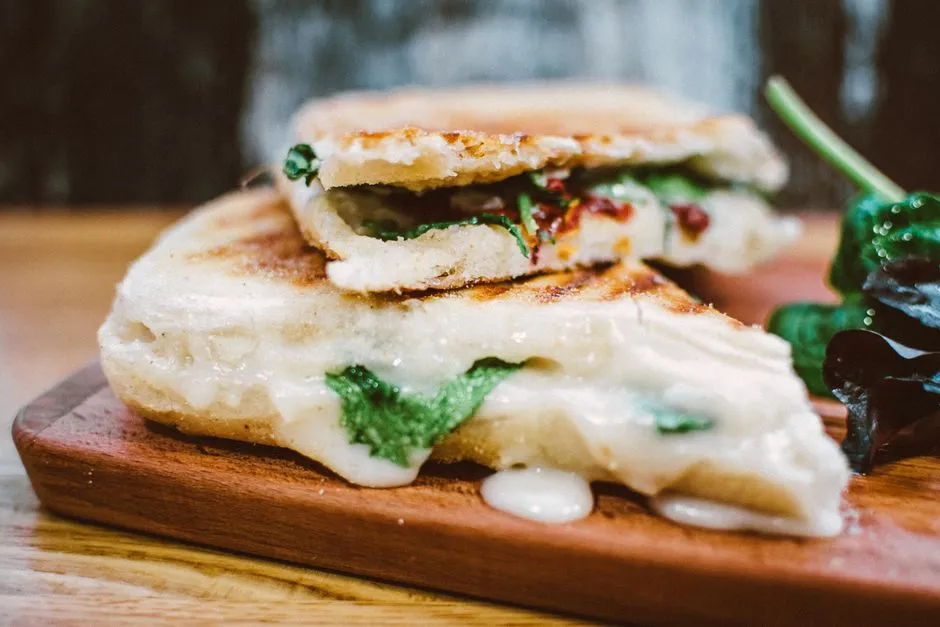
For two roasted pepper and mozzarella panini, layer well-drained peppers, low-moisture mozzarella, basil, and a thin swipe of olive oil between four sturdy bread slices. Press over medium heat until both outsides are crisp and the cheese is fully melted. Moisture control matters: a sandwich press is excellent at many things, but it cannot negotiate with a pepper still carrying half a jar of brine.
Ingredients
- 4 slices sturdy Italian-style bread, about 1/2 inch (1.25 cm) thick
- 120 g low-moisture mozzarella, cut into thin slices
- 100 g jarred roasted red pepper, drained weight
- 8 medium basil leaves, washed and dried
- 2 teaspoons (10 ml) olive oil
- 1/8 teaspoon black pepper
- small pinch fine salt only if needed after checking the cheese and peppers
This recipe makes two sandwiches. It contains wheat and milk; jarred peppers and other packaged ingredients may introduce additional allergens or cross-contact. Check labels for everyone eating.
Remove excess water
Drain the peppers in a clean strainer, then pat them thoroughly dry. Slice large pieces into broad flat strips. Wet peppers create steam and can make the crumb soggy before the cheese melts.
Blot visible moisture from the mozzarella. This formula uses low-moisture mozzarella because fresh mozzarella releases more water and requires a different assembly and cooking approach.
Keep cheese refrigerated until assembly and prevent ready-to-eat ingredients from contacting unclean surfaces.
Browse café kitchen for more small sandwich methods.
Build two even sandwiches
Brush one side of each bread slice with 1/2 teaspoon olive oil. The four half-teaspoon portions total 4 × 1/2 = 2 teaspoons, matching the ingredient list.
Place two slices oil-side down. Divide half the cheese between them, leaving a narrow border. Add 50 g peppers and four basil leaves to each, then divide the remaining cheese over the top. Season with black pepper. Close with the final bread slices, oil-side up.
Putting cheese both below and above the peppers helps hold the filling together. Keep the center even; one giant pepper mound will migrate as soon as pressure arrives.
Choose a safe pressing method
Preheat a panini press according to its instructions, or warm a heavy skillet over medium heat. Do not spray oil near a live flame or hot heating element.
For a press, place the sandwiches inside without overfilling and lower the lid gently. For a skillet, set the sandwiches in the pan and place another heavy, heat-safe pan on top. Do not use unstable weights, glass not rated for stovetop heat, or anything that can slip.
Pan and handles become hot. Keep the work area clear, turn handles inward, and use dry oven protection suitable for the equipment.
Cook by color, heat, and melt
Press or cook until the underside is deeply golden, then check whether the cheese is softening. In a skillet, turn each sandwich carefully and press the second side.
The panini are ready when both faces are crisp and evenly browned, the center is hot, and the mozzarella is fully melted. Exact timing varies with bread, equipment, filling temperature, and pressure. Lower the heat if the bread darkens before the center heats.
Do not cut into the sandwich while holding it. Move it to a stable board first and keep the supporting hand away from the knife path.
Rest briefly and serve
Wait 2 minutes before cutting. The cheese remains hot, but the short rest helps it settle instead of immediately leaving the sandwich for a new life on the plate.
Slice each panini in half and serve with a simple dressed salad, olives, or fruit as appropriate. Taste before adding salt; jarred peppers and cheese may already provide enough.
Finish with affogato for two if the meal would benefit from espresso pouring directly onto dessert, which is usually a strong closing argument.
Handle leftovers safely
Panini are best eaten fresh. Refrigerate unused peppers and mozzarella promptly according to their labels and current official local guidance. Transfer leftover cooked sandwich to a clean covered container without extended warm holding.
Reheat only the needed portion until safely hot, understanding that basil darkens and bread may lose some crispness. Discard food with an uncertain time or temperature history. A beautiful grill mark is not a food-safety certificate.